
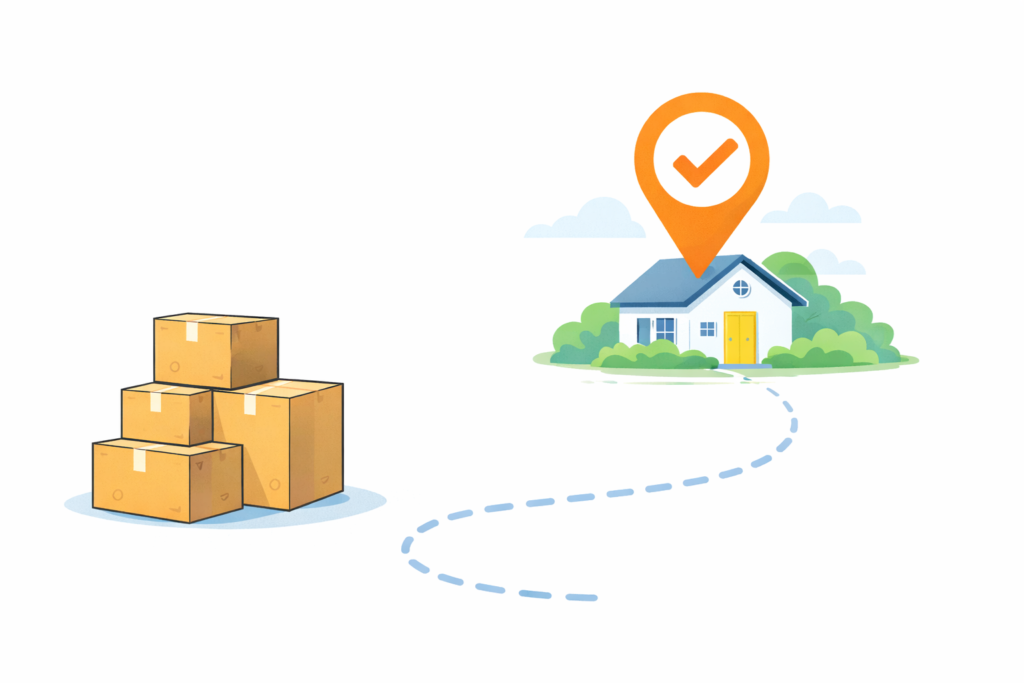
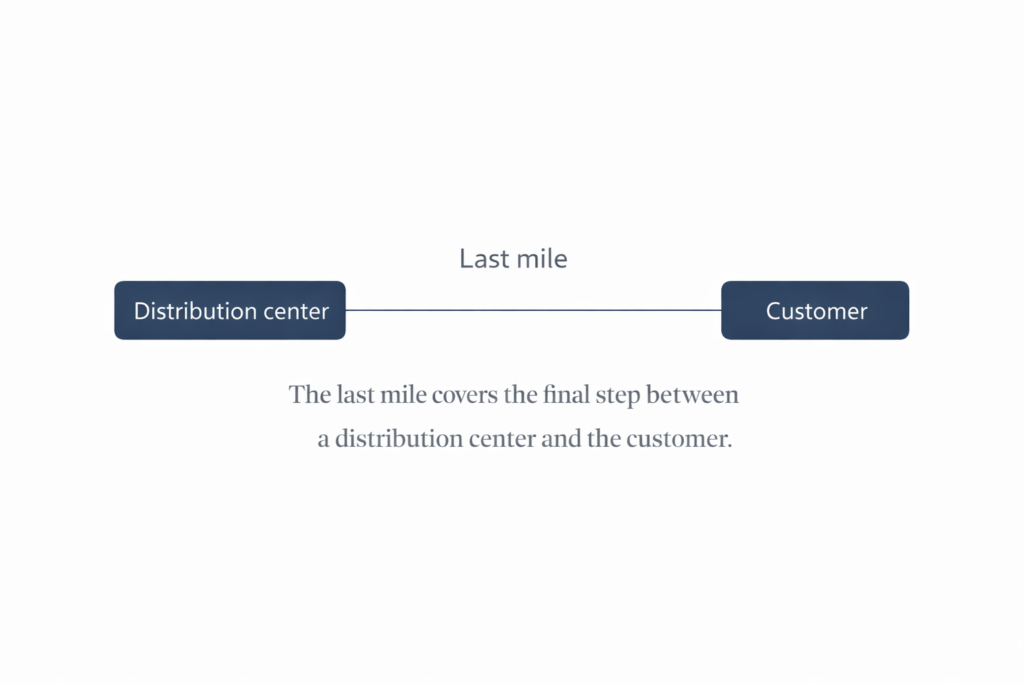
Last mile delivery is one of the most critical parts of modern logistics, and often the most challenging. It represents the final step in the delivery process, where goods move from a local hub or distribution point to the customer’s door.
While it may seem like a short and simple part of the journey, the last mile is where complexity, cost, and customer expectations converge. Small inefficiencies here can quickly turn into missed deliveries, rising costs, and dissatisfied customers.
As delivery volumes grow and service expectations increase, last mile delivery has become a defining factor for operational success. This article explains what last mile delivery is, why it matters, and how businesses can manage it reliably in real-world operations.
Last mile delivery refers to the final segment of the logistics journey, where orders are delivered to their end destination. This destination might be a private home, a retail store, a construction site, or a service location.
Unlike long-haul transport, last mile delivery involves:
Each stop may seem small on its own, but together they create a complex operational puzzle. Drivers must navigate traffic, parking constraints, access restrictions, and varying service times, all while staying on schedule.
Instead of moving goods in bulk between fixed locations, last mile delivery requires coordinating people, vehicles, and time across constantly changing conditions. This is what makes it both essential and difficult to manage at scale.
The goal of last mile delivery is not just to complete deliveries, but to do so in a way that is reliable, predictable, and manageable for everyone involved.
In small operations, last mile delivery is often planned manually. Routes are created based on experience, and adjustments are made throughout the day as issues arise.
As volume increases, this approach quickly breaks down.
More orders mean more stops. More stops mean more variables. Traffic delays, failed deliveries, urgent orders, and driver availability all start to interact in ways that are hard to manage without structure.
What worked for 10 deliveries no longer works for 100. Planners spend more time reacting to problems instead of improving operations. Drivers experience stress from unrealistic schedules. Customers receive uncertain delivery times.
Last mile delivery challenges grow not because people are doing a poor job, but because the system lacks visibility and coordination
Successful last mile delivery depends on having a clear and realistic plan that reflects operational reality. This starts with understanding all the elements involved.
An effective last mile operation typically requires:
A complete overview of all orders and delivery locations
Clear delivery time windows and service requirements
Knowledge of vehicle capacity and driver availability
Realistic assumptions about travel time and service duration
Rather than planning deliveries one stop at a time, last mile delivery works best when viewed as a connected operation. Decisions about one route affect all others. Balancing workload across drivers is just as important as minimizing distance.
The focus is not only on speed, but on feasibility. A plan that looks efficient on paper must also be executable in practice.
The impact of last mile delivery extends far beyond the final handover of goods. When last mile delivery is well managed, operations become more predictable and scalable.
Drivers benefit from clearer routes and achievable schedules, which reduces stress and improves job satisfaction. Planners gain better control and spend less time firefighting. Customers receive more accurate delivery times and a more reliable service experience.
From a business perspective, effective last mile delivery helps:
Reduce delivery costs
Improve vehicle utilization
Increase on-time delivery performance
Support growth without adding unnecessary complexity
It also creates a strong foundation for better visibility, reporting, and continuous improvement across the entire operation.
A common misconception is that last mile delivery planning happens once, at the start of the day. In reality, it is an ongoing process.
Conditions change constantly. New orders arrive, traffic patterns shift, delays occur, and priorities evolve. A static plan quickly becomes outdated.
Reliable last mile delivery requires the ability to adjust routes and schedules as the day unfolds, without losing control of the overall operation. Replanning should support flexibility while maintaining structure and predictability.
This approach allows operations to remain responsive while still delivering consistent performance.
Last mile delivery is relevant for many types of organizations. Any operation that manages multiple daily stops can benefit from a structured approach.
Delivery companies gain improved efficiency and reliability. Service and maintenance providers benefit from better scheduling and balanced workloads. Retailers and distributors benefit from predictable replenishment and higher customer satisfaction.
Ultimately, any business that delivers goods or services directly to customers can create significant value by improving how the last mile is planned and executed.

📩 nora@zoopit.no
Or book an introduction here:
Talk directly with Nora to discuss your last mile delivery challenges and goals.
An introduction is an opportunity to explore how structured planning and realistic routing can support more reliable and scalable delivery operations.
Looking for more? Head back to our homepage to explore all of Zoopit’s logistics solutions, discover key features, and see how we can make your operations smarter.