
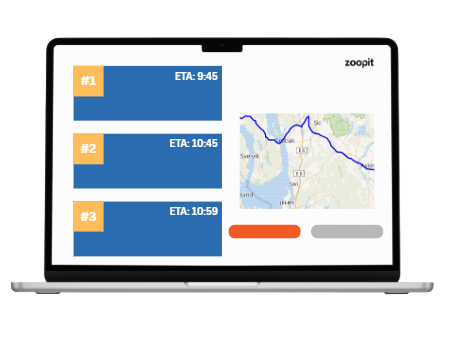
Ruteoptimalisering er grunnlaget for pålitelige og lønnsomme leveringsoperasjoner. Når et selskap har mange stoppesteder, sjåfører og kjøretøy å administrere, hjelper ruteoptimalisering planleggerne med å gjøre et komplekst puslespill om til en oversiktlig plan.
Ruteplanlegging er prosessen med å planlegge den mest effektive og realistiske rekkefølgen av stopp for hvert kjøretøy og hver sjåfør, slik at hver rute respekterer kapasitetsgrenser, lovede leveringstider, serviceprioriteringer og de praktiske realitetene i den daglige driften i et travelt logistikknettverk, fra den første hentingen til den endelige leveransen.
En god rutingprosess tar hensyn til tidsvinduer for levering, tjenestetyper, kjøretøykapasitet, sjåførferdigheter, trafikkmønstre og hviletidskrav, med mål om å fullføre alle leveranser og serviceoppdrag med så lite avstand, tid og kostnader som mulig, samtidig som kundene får et høyt servicenivå.
Uten dette må planleggerne stole på personlig erfaring og gjetning etter hvert som antallet bestillinger øker, noe som fort blir stressende og ineffektivt, mens programvare for ruteoptimalisering bruker strukturerte data til å støtte planleggerne slik at planen forblir konsekvent, oversiktlig og enklere å håndtere hver dag.
Ruteplanleggingsprogramvare er en sentral del av moderne logistikkplanlegging og leveringsstyring. Den hjelper organisasjoner med å omdanne komplekse sett med bestillinger, kjøretøy og sjåfører til planer som er enklere å gjennomføre, enklere å overvåke og enklere å forbedre over tid.
Ruteoptimalisering reduserer den totale kjørte distansen og tiden på veien, noe som reduserer drivstofforbruket, overtiden og slitasjen på kjøretøyene.
Rutene er bygget opp rundt sanntidsvinduer og realistiske reisetider, slik at flere leveranser blir fullført i tide med færre mislykkede forsøk.
Planleggerne får et tydelig utgangspunkt fra systemet og bruker mindre tid på å lage ruter for hånd og mer tid på å håndtere viktige unntak.
Kapasiteten utnyttes jevnere og mer effektivt, slik at hvert kjøretøy og hver sjåfør fullfører et fornuftig antall stopp uten overbelastning.
Kundene får tydeligere informasjon og mer nøyaktige ankomstestimater, noe som fører til færre supporthenvendelser og høyere tilfredshet.
Ruteoptimalisering produserer strukturerte data om ruter og ytelse, noe som gir ledere en klarere oversikt over hvor de kan gjøre forbedringer.
Hjelper til med å organisere hjemleveranser og påfylling av varer i butikken, slik at kundene får bestillingene i tide og hyllene er velfylte.
Det gjør det enklere å håndtere mange daglige stopp, hasteleveranser og skiftende prioriteringer, samtidig som transportkostnadene holdes under kontroll.
Støtter strenge tidsvinduer og temperatursensitive produkter, slik at ferske varer kommer frem i god stand og med minimalt svinn.
Hjelper med å planlegge besøk for teknikere og servicepersonell slik at de kan utføre flere jobber per dag uten urealistiske reisetider.
Støtter gjentatte leveringsruter og komplekse bestillingsmønstre, slik at kundene får regelmessig og forutsigbar service.
Gjør det enklere å håndtere sesongmessige etterspørselstopper ved å bruke kjøretøy og sjåfører mer effektivt i travle perioder.
Manuell ruteplanlegging kan fungere for en håndfull stoppesteder, men den bryter raskt sammen når virksomheten vokser. Ruteoptimalisering bruker algoritmer til å planlegge ruter som er raskere, billigere og enklere å gjennomføre, selv med komplekse begrensninger.
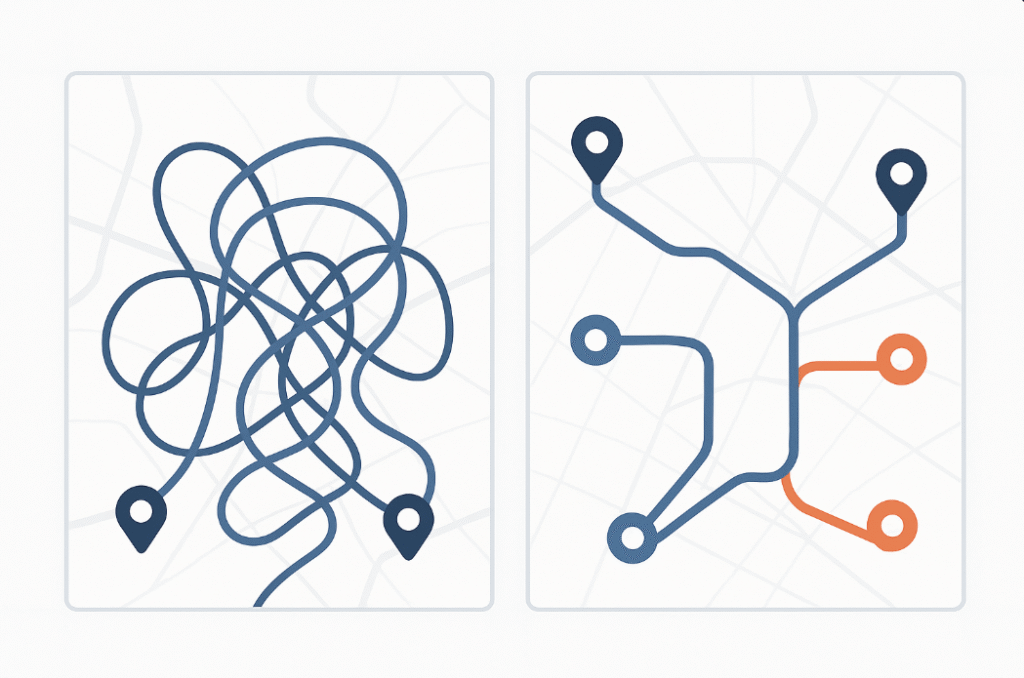
Manuell ruteplanlegging
Ruter planlagt for hånd eller i regneark
Begrenset evne til å håndtere tidsvinduer og begrensninger
Tidkrevende for planleggerne
Vanskelig å tilpasse seg endringer i løpet av dagen
Høyere drivstoff- og lønnskostnader
Zoopit Ruteoptimalisering
Optimaliserer automatisk ruter for hele flåten
Håndterer tidsvinduer, kapasitet og prioriteringer
Planlegger ruter på minutter i stedet for timer
Tilpasser seg enkelt til endringer og akutte stopp
Reduserer reisetid, drivstofforbruk og planleggingsarbeid
Zoopit hjelper teamene med å gå fra manuell planlegging til intelligent ruteoptimalisering, uten å gjøre den daglige driften mer kompleks.
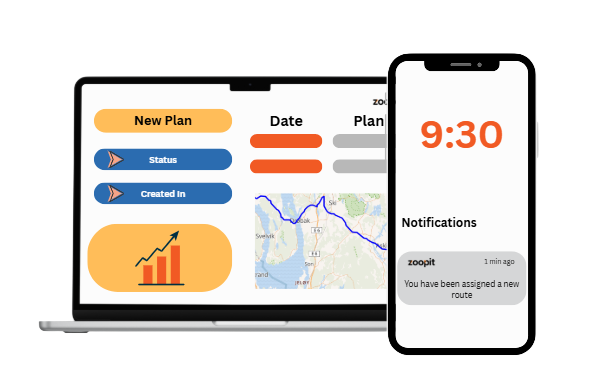
Ordrer opprettes i dine eksisterende systemer eller legges inn via Zoopit ordrebestilling. Alle viktige detaljer lagres på en strukturert måte, for eksempel adresser, tidsvinduer, servicenivå og spesielle krav.
Kjøretøy, sjåfører og serviceområder defineres i plattformen sammen med regler for kapasitet, kompetanse og arbeidstid. Zoopit bruker disse inndataene når ruteoptimaliseringen starter, slik at hver plan gjenspeiler den virkelige verden.
Zoopit analyserer alle aktive ordrer og tilgjengelige ressurser, og beregner deretter effektive ruter for hvert kjøretøy. Resultatet er en foreslått plan som respekterer tidsvinduer og begrensninger, samtidig som den tar sikte på å minimere avstand og tid på veien.
Planleggerne går gjennom den foreslåtte planen, gjør eventuelle nødvendige endringer og bekrefter rutene. Hvis det dukker opp en ny ordre eller en forsinkelse, kan de kjøre ruteoptimalisering på nytt for en del av operasjonen og raskt oppdatere planen.
Sjåførene mottar rutene sine i mobilapplikasjonen og oppdaterer status etter hvert som de fullfører stoppene. Ledere og supportteam kan følge fremdriften i sanntid og bruke data fra ruteoptimaliseringen til å forbedre neste planleggingssyklus.
Virkelige leveringsoperasjoner er aldri enkle. Zoopit optimaliserer ruter ved å ta hensyn til de reelle begrensningene som planleggere og sjåfører møter hver dag, ikke bare avstand eller tid.
Sørger for at hvert stopp er planlagt innenfor kundens leveringsvinduer, servicenivåavtaler og prioriterte tidsluker.
Tar automatisk hensyn til kjøretøystørrelse, vektgrenser og lastfordeling for å forhindre overlast og ineffektiv ruting.
Planlegger ruter som passer innenfor lovlige kjøretider, skiftplaner og nødvendige pauser for å overholde lover og regler og være realistisk.
Unngår restriksjonssoner, lavutslippsområder og steder med kjøretøy- eller tidsbaserte adgangsbegrensninger.
Optimaliserer ruter på tvers av flere depoter, lagre eller startpunkter for sjåfører uten manuelle justeringer.
Håndterer endringer i siste liten og hasteleveranser uten å ødelegge resten av ruteplanen.
Det handler om å planlegge ruter slik at sjåførene besøker alle nødvendige stoppesteder på en effektiv måte, samtidig som tidsvinduer, kapasitetsgrenser og servicekvalitet overholdes. Det gjør mange separate bestillinger om til én klar og praktisk plan.
Ja, det er det. Zoopits ruteplanleggingsprogramvare gir planleggerne et godt utgangspunkt, men de beholder likevel kontrollen. Planleggerne kan flytte stoppesteder mellom rutene, løse spesialtilfeller og deretter kjøre ruteoptimaliseringen på nytt når de ønsker å oppdatere planen.
Mange organisasjoner ser verdien av det kort tid etter at de har begynt å bruke det. Planleggingen går raskere, rutene blir mer realistiske, og teamene bruker mindre tid på å håndtere problemer som kunne vært unngått. Over tid kan bedriften finjustere data og regler for å forbedre resultatene enda mer. Oppdag dette selv ved å begynner med zoopit
Det fungerer best når bestillinger, adresser, tidsvinduer, kjøretøykapasitet og sjåførinformasjon er lagret på en oversiktlig og strukturert måte. Zoopit hjelper deg med å sette opp disse dataene slik at ruteoptimaliseringsprosessen samsvarer så godt som mulig med den virkelige driften.
Har du noen spørsmål? Ring oss på +47 21 08 66 70