
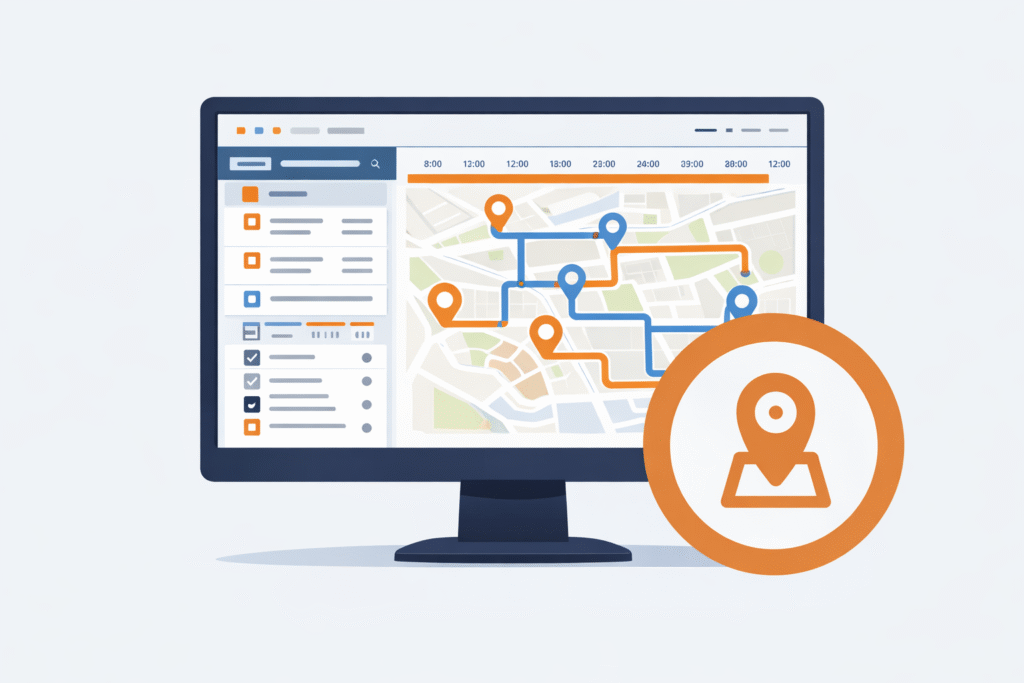
Ruteplanlegging i Zoopit hjelper planleggere og dispatchere med å utforme effektive, realistiske ruter før dagen starter. Ved å ta hensyn til begrensninger som tidsvinduer, kjøretøykapasitet, sjåførtilgjengelighet og servicekrav, sørger Zoopit for at rutene er gjennomførbare og i tråd med driftsbehovene.
Ved å koble ruteplanlegging sammen med flåtestyring, utsendelse og direkte kjøring, gir Zoopit teamene full kontroll fra planlegging til ferdigstillelse.
Ruteplanlegging i Zoopit gjør det mulig for teamene å opprette strukturerte, begrensningsbevisste ruter som gjenspeiler hvordan arbeidet faktisk utføres. Planleggerne kan lage ruter som balanserer effektivitet, servicenivåer og ressurstilgjengelighet, noe som gir driften et solid grunnlag før utførelsen begynner.
Jobbene grupperes i logiske ruter basert på geografi, tidspunkt og arbeidsmengde, slik at planleggerne får en oversiktlig plan for dagen.
Rutene planlegges ved hjelp av tidsvinduer, servicetid, kjøretøykapasitet, sjåførskift og forretningsregler.
Planleggerne kan lage ruter manuelt eller bruke systemassistanse for å fremskynde planleggingen og justere rutene ved behov.
Rutene er bygget for å matche forholdene i den virkelige verden, noe som reduserer endringer i siste øyeblikk og urealistiske planer.
Kjøretøy og sjåfører fordeles effektivt, slik at man unngår overbelastning eller underutnyttelse.
Planleggerne kan opprette og justere ruter raskere, selv når de håndterer store oppdragsmengder og hyppige driftsendringer.
Tydelige planer gjør det enklere for sjåfører og disponenter å følge tidsplaner, håndtere arbeidsmengden og overholde forpliktelser.
Tidsvinduer og prioriteringer respekteres under planleggingen, noe som hjelper teamene med å overholde SLA-er.
Planene kan gjennomgås og optimaliseres før rutene settes i drift, noe som reduserer forstyrrelser i løpet av dagen.
Bidrar til å planlegge leveringsruter med flere stopp som respekterer kundenes tidsvinduer og leveringsprioriteringer.
Støtter oppretting av ruter med store volumer med konsekvent struktur og balansert arbeidsbelastning.
Muliggjør nøye planlegging av tidssensitive leveranser og lett bedervelige varer.
Gjør det mulig å planlegge teknikernes jobber effektivt basert på ferdigheter, lokasjoner og tilgjengelighet.
Gir oversikt og kontroll over rutestrukturer på tvers av regioner og kunder.
Støtter planlegging av ruter som er i tråd med kontraktsfestede leveringstider og forpliktelser.

Jobber legges til i Zoopit manuelt eller gjennom integrasjoner, inkludert alle nødvendige detaljer og begrensninger.
Tidsvinduer, varighet, kjøretøygrenser og sjåførtilgjengelighet er definert.
Planleggerne oppretter ruter manuelt eller med systemassistanse og vurderer gjennomførbarheten.
Rutene kan finjusteres for å balansere arbeidsmengde, tidsbruk og operative prioriteringer.
Når rutene er godkjent, tildeles de til sjåførene og går over til direkte kjøring og sporing.
Ruteplanlegging i Zoopit er prosessen med å lage strukturerte, begrensningsbevisste ruter før kjøring, noe som sikrer at jobbene grupperes og sekvenseres på en realistisk og effektiv måte.
Zoopit støtter både manuell planlegging og assistert planlegging, slik at teamene kan beholde kontrollen samtidig som prosessen går raskere.
Ja. Planlagte ruter kan optimaliseres ytterligere ved hjelp av Zoopits ruteoptimalisering for å forbedre effektiviteten og redusere reisetiden.
Ja. Rutene planlegges basert på tilgjengelige kjøretøy, sjåfører, skift og kapasitetsbegrensninger.
Har du noen spørsmål? Ring oss på +47 21 08 66 70